
L
o
a
d
i
n
g
.
.
.

+88 01713-009111
House- 42 Road-07, Sector-13, Uttara, Dhaka, Bangladesh
habibullahmuhammadiqbal@gmail.com
House # 05, Shah Makhdum Avenue, Sector #14, Uttara Dhaka-1230, Bangladesh
Rules and Regulations
Finance, Banking, Riba
Muslim Sharia Laws
Business, Consulting, Finance
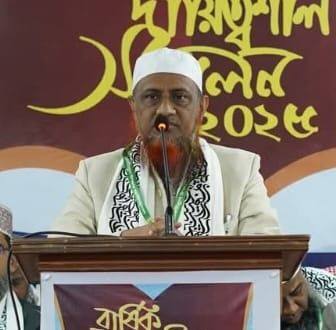
Building a I am Habibullah Muhammad Iqbal, the Chairman of the Tanzimul Ummah Foundation, a dedicated teacher, Daee, and columnist. My life’s objective is to cultivate a deep understanding of Islamic knowledge and spread it across the globe, inviting people to the path of Almighty Allah through faithful personality and good conduct. My journey began with the completion of my Hifz-e-Quran in 1988 , followed by a Kamil Masters in Hadith. To bridge the gap between traditional and modern education, I also earned my MA in Political Science from Jagannath University and an MA in Islamic Studies.
In 1999, I founded the Tanzimul Ummah Foundation, a mission-driven educational organization registered with the government of Bangladesh. Today, this foundation oversees over 110 institutes and more than 100 Al-Quran Education Centers, serving a community of over 60,000 students and teachers. Beyond education, I have authored two books and written more than 100 articles on diverse subjects , while delivering over 500 speeches at various gatherings.
My commitment to excellence has been recognized with awards from the President and Prime Minister of Bangladesh, as well as a special award from the Imam of Masjid al-Haram. I have also had the distinct honor of visiting Saudi Arabia as a guest of King Salman Bin Abdul Aziz. My vision remains clear: to produce qualified students capable of facing modern challenges while proving Islam as the victorious way of life.
Muslims around the world often face difficulty finding resources to practice their faith conveniently. This includes locating halal food, finding mosques or prayer spaces, managing daily prayer schedules, learning about Islamic teachings, and accessing financial services that comply with Sharia law. These challenges are particularly pronounced in non-Muslim-majority countries, where access to such services can be limited or fragmented.
Muslim communities face challenges in managing prayer schedules, finding halal food, accessing Islamic education, and locating mosques while traveling. Additionally, keeping track of daily Islamic obligations such as prayer times, Zakat calculations, and learning the Quran can be cumbersome, especially in non-Muslim-majority countries.
Total Institutes
Students & Teachers
Speeches Delivered
Articles Published
